The Burial Place

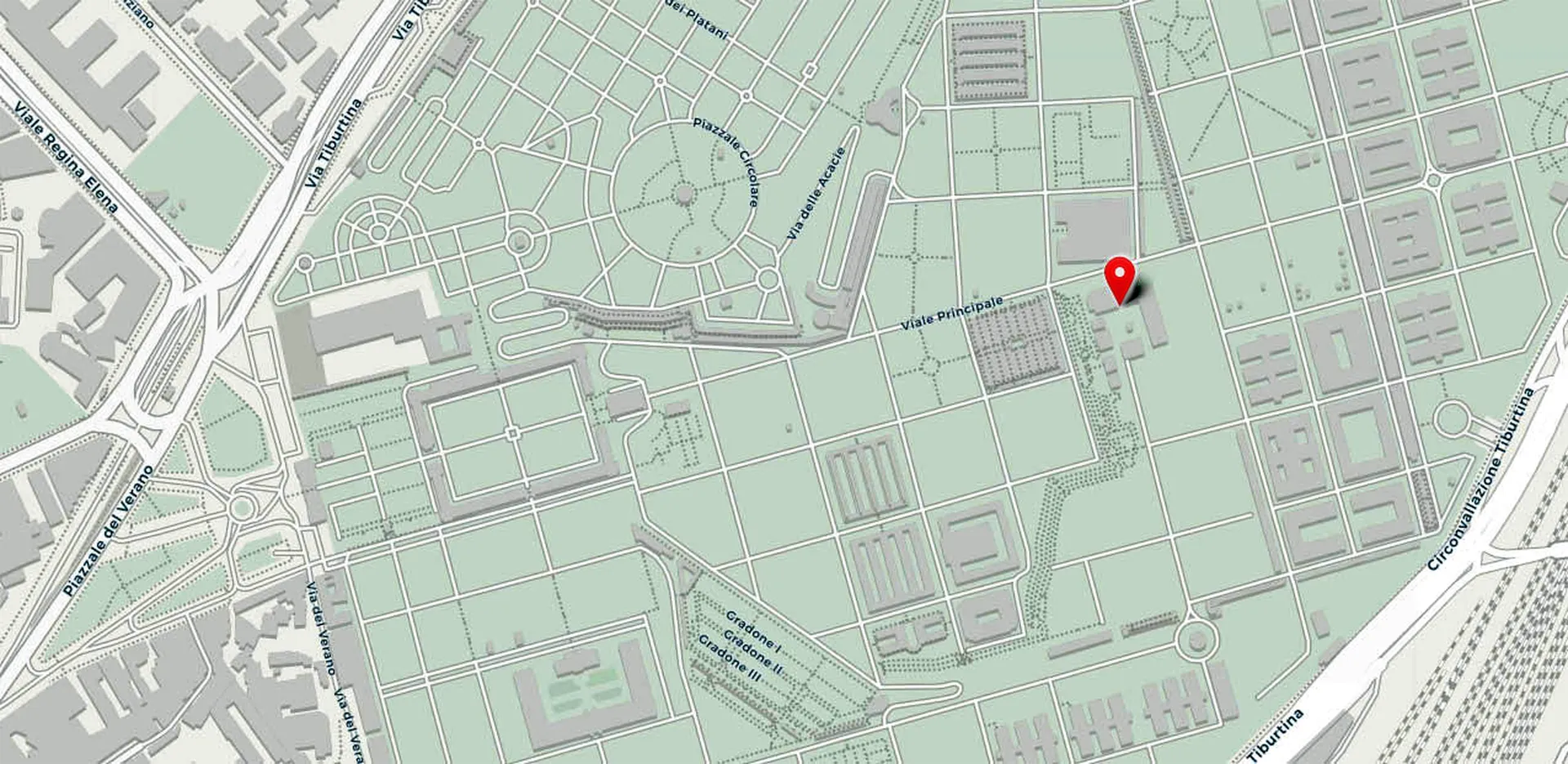
The burial place of Louis Brüls survives in Rome's Campo Verano. Together with his paintings, it is one of the few physical traces of his life that remain in place.
Campo Verano, officially the Communal Monumental Cemetery (Cimitero Comunale Monumentale Campo Verano), is among Rome's most prestigious and historically important burial grounds.
Founded in the early nineteenth century and extending across some 83 hectares, it is renowned for its monumental tombs and funerary sculpture. Its scale, history, and "open-air museum" character make it a landmark of Rome's funerary heritage.
The following photographs were likely taken in the late 1960s or early 1970s by Léon Hucklenbroich. Private family collection.

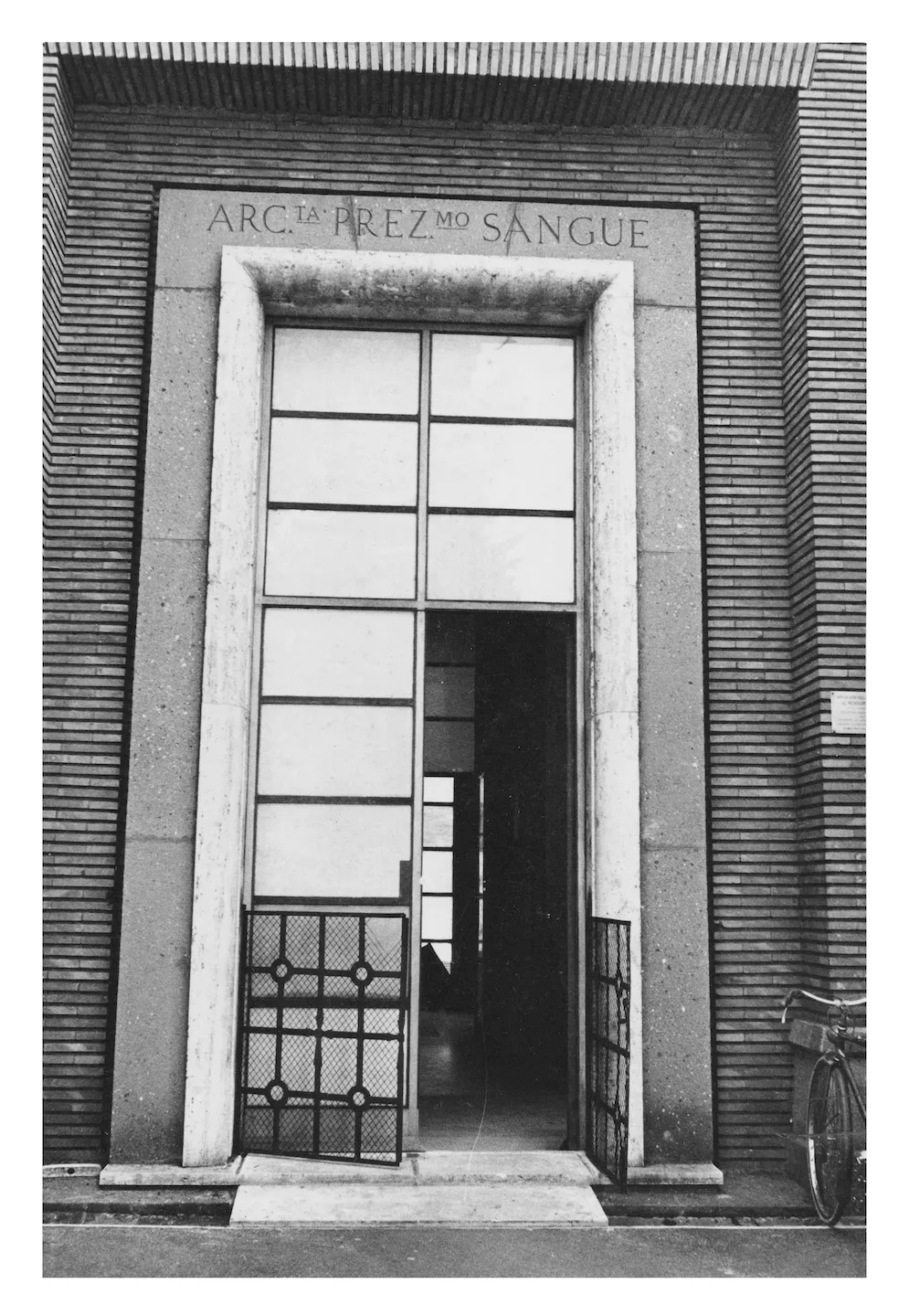
Brüls was interred in the Cappella dell'Arciconfraternita del Preziosissimo Sangue, a chapel situated almost at the centre of the cemetery, on a rise in the ground. Its exterior, in red brick, appears relatively modern, but the tombs stacked within its walls date back much further.

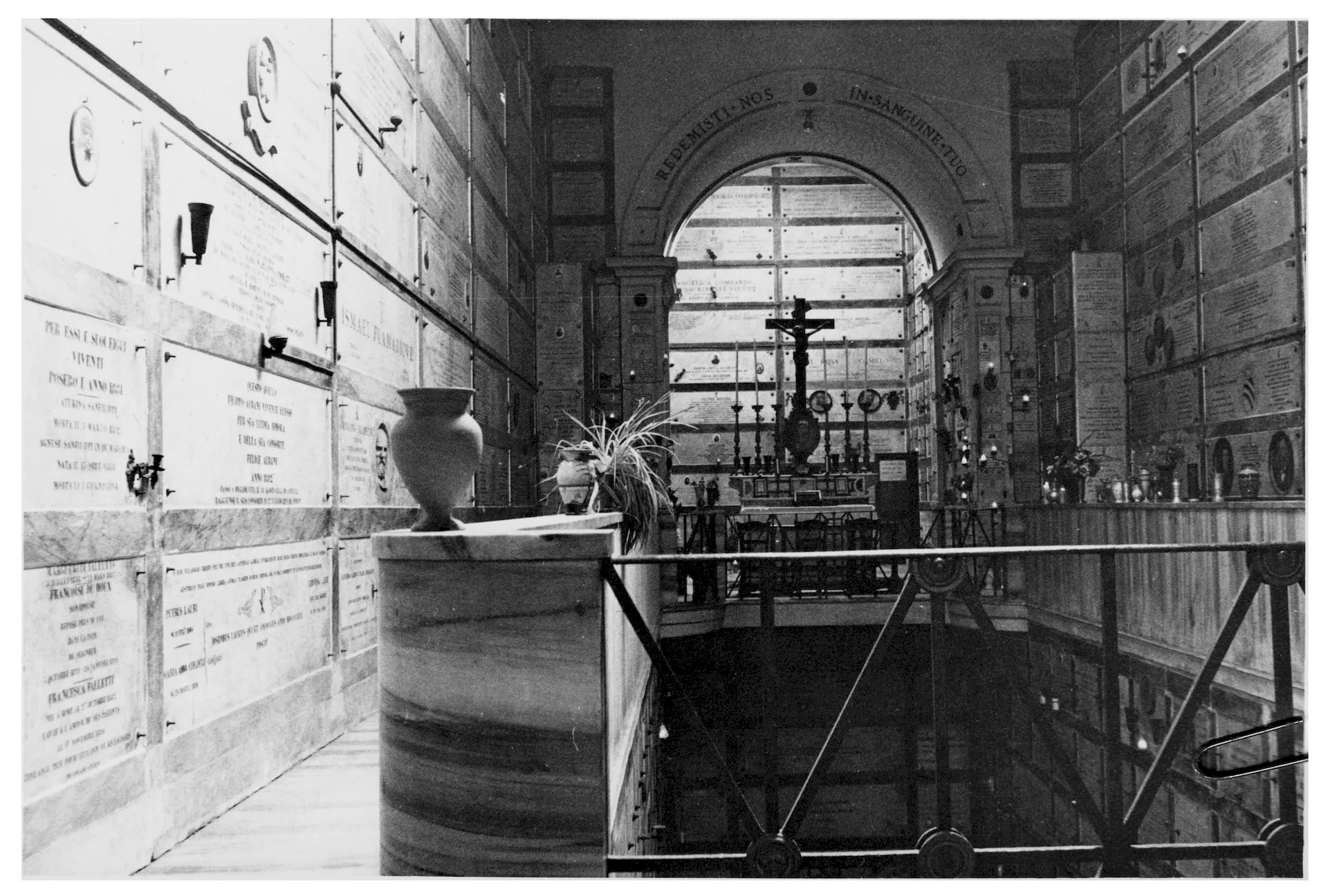
Inside the chapel, the central space is arranged around an altar, in front of which a large rectangular excavation reveals a subterranean level.
The walls, both in the main chapel and below, are lined with marble plaques concealing the tombs, stacked to a height of at least five metres.
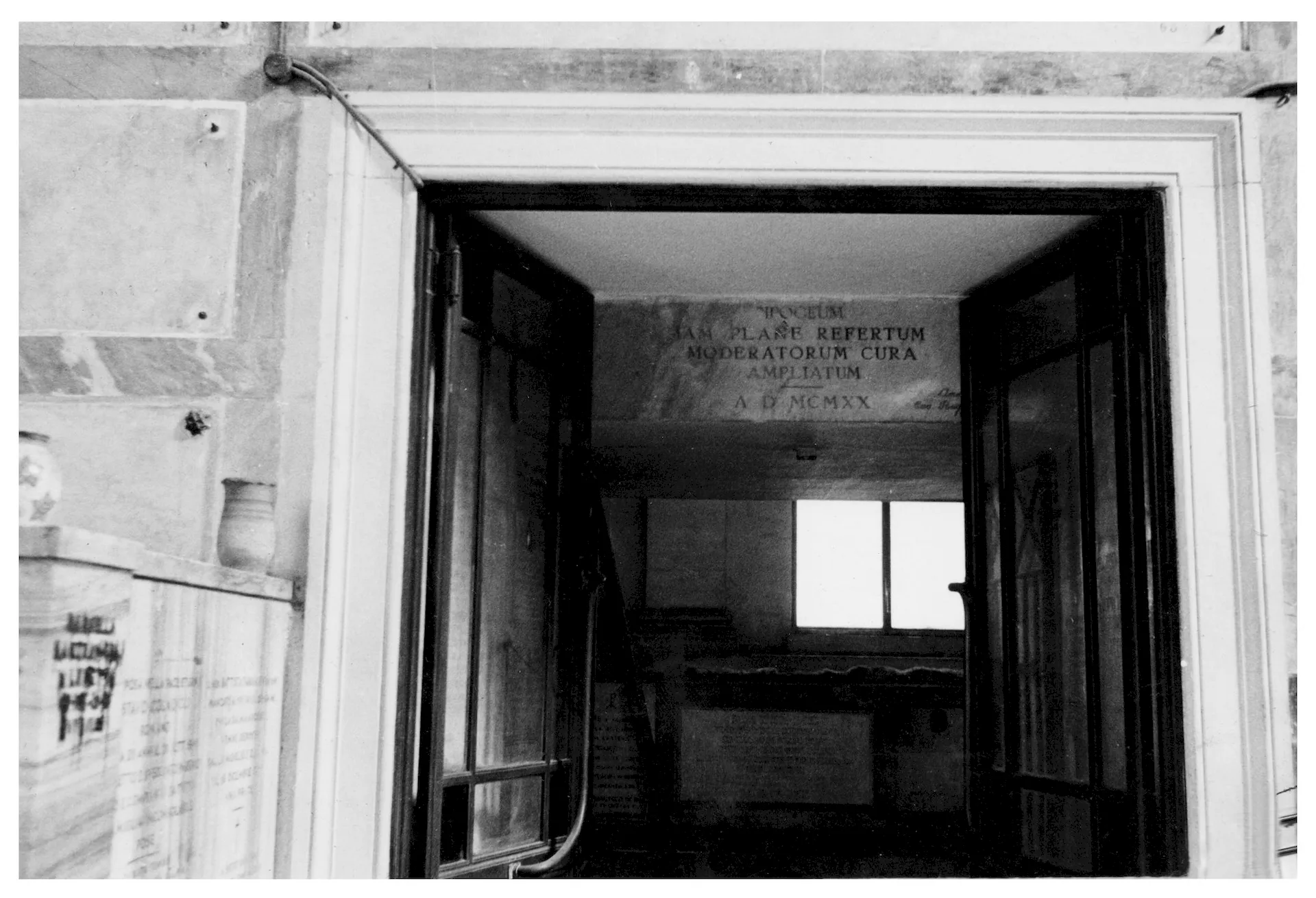
The tomb of Louis Brüls is not in this main space. It lies in a left lateral annex of the chapel: a narrow corridor, barely one metre wide, running parallel to the main axis. The plaque is the second-to-last in the left wall, set at ground level beneath the last window.


The marble plaque bears two sculpted profile medallions: on the left, the profile of his wife; on the right, that of the painter. Between them is an inscription in Italian.

The original Italian text reads:
Alle ceneri del cav. Ludovico Brüls
nato a Bruxelles il 15 aprile 1803 morto in Roma il 19 dicembre 1882
Valente pittore grande d'animo seppe all'eccellenza dell'arte accoppiare
le rare doti del cuore
Questo marmo pose la sconsolata moglie attendendo di essere con lui ricongiunta
O marito generoso
ti rimeriti nelle sua pace Dio
In translation:
To the remains of the Cavaliere Lodovico Brüls,
born in Brussels on 15 April 1803, died in Rome on 19 December 1882
A skilled painter, great of soul,
he knew how to combine artistic excellence with the rare qualities of the heart
This marble was placed by his inconsolable wife, waiting to be reunited with him
O generous husband,
may God reward you in His peace
The inscription names Brüls in the Italian form as Lodovico Brüls and gives him the title Cavaliere, the Italian equivalent of Chevalier de l'Ordre de Léopold. He had received the knighthood by Royal Decree on 15 December 1862, in recognition of his work as a history painter and his service as vice-president of the committee of the Belgian national church in Rome.
The birthplace given on the tomb, Brussels, is incorrect. Brüls was born at Gut Drinhausen, near Übach, in what was then the Département de la Roer. Both branches of the family who later researched his life knew this. The Hucklenbroich dossier noted the error on the monument, and Jacques Dufrasne's family tradition independently confirmed Drinhausen as the true birthplace. Marie-Louise Hucklenbroich likewise recorded the correct origin in her own biographical notes. The death certificate, filed in Rome the day after his death, recorded his birthplace simply as "Belgium" and left the town blank. Why the tomb says Brussels remains unexplained.
The inscription makes no mention of particular paintings or public honours. It describes Brüls simply as a painter and as a man of feeling and character.
His wife, Anna Maria Micocci, named on the death certificate as his spouse, placed the marble. The plaque records that she awaited reunion with him. This is among the few pieces of direct evidence that she survived him and that she played a part in preserving his memory.
The tomb at Verano marks the final documented place in a life that must otherwise be reconstructed from scattered sources. It anchors his final years in Rome, the city where he lived and worked for more than four decades.
The monument also preserves something personal. It speaks of loss, remembrance, and devotion; and it is one of the clearest surviving signs that Louis Brüls was remembered, and mourned, by those closest to him.